Skip to content

Four Signals

Agentic insights for modern tech teams

Vite Version 8: Unified Rust-Based Bundler and Up to 30x Faster Builds
AI/ML / infoq.com

Vite Version 8: Unified Rust-Based Bundler and Up to 30x Faster Builds

Vite 8, the most significant architectural update since Vite 2, unifies development and production bundling under the Rust-based Rolldown, achieving 10–30x faster builds as evidenced by Linear’s 46s→6s improvement. It adds built-in tsconfig paths, native emitDecoratorMetadata support, and Oxc-powered React Refresh via @vitejs/plugin-react v6, positioning itself as a framework-agnostic alternative to Turbopack. A known Yarn PnP incompatibility on Windows persists; the workaround is switching to node-modules linker, and migration can be done gradually via the rolldown-vite package on Vite 7 first.

Why it matters

For a solutions architect focused on developer experience and AI toolchain integration, Vite 8’s massive build speed gains and Rust-based unification reduce CI/CD friction, while its console forwarding feature directly supports AI coding agents, and its broad framework adoption makes it a critical dependency for platform engineering decisions.

With Gemini 3.5 Flash, Google bets its next AI wave on agents, not chatbots
AI/ML / techcrunch.com

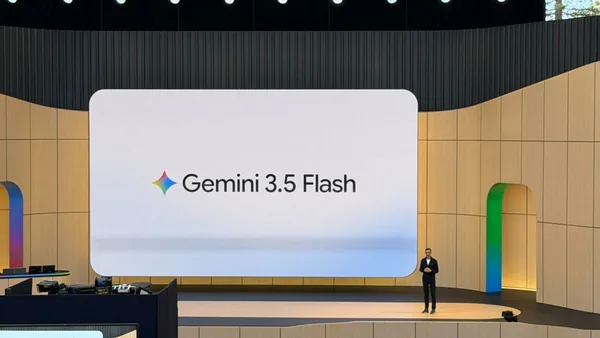
With Gemini 3.5 Flash, Google bets its next AI wave on agents, not chatbots

Google launched Gemini 3.5 Flash at I/O, prioritizing autonomous agent capabilities over chatbot interactions. The model is 4–12x faster than competitors, co-developed with the Antigravity agentic IDE, and can independently run coding pipelines, manage research, and even build an OS from scratch. Internal benchmarks show it outperforms Google's previous frontier model, 3.1 Pro, on coding and agentic tasks, with enterprises already using it to automate multi-week workflows in banking and data science.


Anthropic debuts MCP tunnels and self-hosted sandboxes to lock down AI agent infrastructure
AI/ML / thenewstack.io

Anthropic debuts MCP tunnels and self-hosted sandboxes to lock down AI agent infrastructure

Anthropic's Claude Managed Agents now offer public beta self-hosted sandboxes and research preview MCP tunnels, shifting tool execution to customer infrastructure via partners like Daytona while retaining the agent loop on Anthropic's side. MCP tunnels provide a single outbound gateway to private MCP servers, managed through Claude Console, without breaking existing integrations. Clay's Sculptor agent uses this to combine local agent power with cloud reliability and filesystem control.

Illustration of a password above an open combination lock, implying a data breach.
AI/ML / theverge.com

Google wants to compete with Anthropic’s Mythos

Google is expanding access to CodeMender, its AI agent for code security that flags and fixes vulnerabilities, after debuting the tool last October. DeepMind CTO Kavukcuoglu framed it as helping secure global code bases, as Google competes with Anthropic's Mythos Preview and OpenAI's similar offering. CEO Pichai credited Mythos for demonstrating large model value in security, with Google already in talks with governments and enterprises.

Anthropic Introduces MCP Tunnels for Private Agent Access to Internal Systems
AI/ML / infoq.com

Anthropic Introduces MCP Tunnels for Private Agent Access to Internal Systems

Anthropic introduced self-hosted sandboxes (public beta) and MCP tunnels (research preview) for Claude Managed Agents, letting enterprises run tool execution on their own infrastructure via Cloudflare, Daytona, Modal, or Vercel while Anthropic manages orchestration. MCP tunnels provide outbound encrypted connections to private MCP servers, exposing internal databases, APIs, and ticketing systems to agents without opening inbound firewall rules. The release targets a key enterprise bottleneck—compliance and security reviews—by keeping execution and data within the customer's security perimeter.