
Skip to content

Four Signals

Agentic insights for modern tech teams

Claude Code Adds Dynamic Workflows for Parallel Agent Coordination
AI/ML / infoq.com

Claude Code Adds Dynamic Workflows for Parallel Agent Coordination

Anthropic's Claude Code now offers Dynamic Workflows (research preview) to dynamically orchestrate parallel subagents for complex tasks like migrations and security audits, activated explicitly or via the ultracode setting. The system plans, distributes, and validates results, saving progress for resume, though token usage is substantially higher. Available on Max/Team/Enterprise plans and via API partners (Bedrock, Vertex AI, Foundry), it signals a shift from single-model performance to coordinated multi-agent systems.

Why it matters

For a Solutions Architect evaluating AI agent orchestration patterns, this is a concrete implementation of dynamic multi-agent coordination from Anthropic, directly impacting design decisions for parallel, long-running engineering workflows on cloud platforms.

BadHost Vulnerability Exposes AI Agents, Evaluators, and LLM Gateways
AI/ML / infoq.com

BadHost Vulnerability Exposes AI Agents, Evaluators, and LLM Gateways

BadHost (CVE-2026-48710) is a high-severity authentication bypass in Starlette (325M weekly downloads), exploiting malformed Host headers to bypass path-based access controls—discovered during a vLLM audit. The vulnerability directly compromises AI agents, LLM gateways, and MCP servers, with exploit chains leading to SSRF and remote code execution, and is argued to be critical rather than moderate given its downstream impact. Many AI services on internal networks lack reverse-proxy protection, making them directly exploitable, while the flaw was missed by AI code analysis tools.

JetBrains open-sources Mellum2 to go where Claude Code can’t
AI/ML / thenewstack.io

JetBrains open-sources Mellum2 to go where Claude Code can’t

JetBrains open-sourced Mellum2, a 12B-parameter MoE model with 2.5B active parameters per token, targeting agentic infrastructure tasks (routing, retrieval, sub-agent coordination) and private on-premises deployment — going where Claude Code can't. Successor to Mellum (4B code completion), it achieves 192 tokens/sec on a single H100, pulling 21% ahead of Qwen2.5-7B under concurrent load and scoring 78.4% on EvalPlus function-level code generation, though it concedes broader reasoning (GPQA, MMLU-Redux) to frontier models. Two variants ship: "instruct" for direct answers and "thinking" for explicit reasoning traces in multi-step agentic tasks.

Google Workspace CLI: Unified Command-Line Tool Built for Humans and AI Agents
AI/ML / infoq.com

Google Workspace CLI: Unified Command-Line Tool Built for Humans and AI Agents

Written in Rust and licensed under Apache 2.0, the Google Workspace CLI (gws) dynamically generates commands from Google's Discovery Service, eliminating the need for static releases. It supports AI agents with structured JSON output, over 100 SKILL.md-packaged skills, and an MCP server for tools like Claude Code, but community feedback notes setup friction with OAuth scopes and its unofficial status. The tool contrasts with the static-command CLI for Microsoft 365, which offers a more mature authentication flow.

A photograph of a red fedora
General / arstechnica.com

Dozens of Red Hat packages backdoored through its official NPM channel

A threat actor compromised Red Hat's official @redhat-cloud-services NPM namespace to push over 30 backdoored packages containing the Shai-Hulud worm, which executes during npm install to steal GitHub Actions secrets, npm tokens, Kubernetes/Vault credentials, and then spreads by republishing to other accounts. The attack leveraged compromised Red Hat GitHub Actions OIDC credentials from a prior supply-chain incident, and the worm is based on open-source malware previously released by TeamPCP.

26B Gemma 4 Deployment with NVIDIA L4, MCP, Cloud Run, and Antigravity CLI
DevTools / dev.to

26B Gemma 4 Deployment with NVIDIA L4, MCP, Cloud Run, and Antigravity CLI

NVIDIA L4 GPUs on Cloud Run host a 26B Gemma 4 model via vLLM, managed through a suite of Python MCP tools. The Antigravity CLI (successor to Gemini CLI) connects to the MCP server over stdio transport, enabling provisioning, observability, and performance testing. A guided setup clones the gemma4-tips repo, configures environment variables, and validates the local MCP connection before deploying.

31B — Gemma 4 Deployment with NVIDIA L4, MCP, Cloud Run, and Antigravity CLI
DevTools / dev.to

31B — Gemma 4 Deployment with NVIDIA L4, MCP, Cloud Run, and Antigravity CLI

Deploying Gemma 4 on Google Cloud Run with NVIDIA L4 GPUs and vLLM, this project uses Python MCP tools and Antigravity CLI (successor to Gemini CLI) to provision containers, manage the model, and run observability/performance tests. The MCP server communicates via stdio transport within the same local environment, with environment setup scripts for GCP authentication and variable management.

Article: Why Vector Search Alone Isn't Enough: Hybrid Retrieval for RAG
Security / infoq.com

Article: Why Vector Search Alone Isn't Enough: Hybrid Retrieval for RAG

Vector search alone fails RAG on exact-match queries like 'enable payment_v2_enforce' — embedding similarity ranks enable/disable runbooks identically, causing LLMs to confidently generate wrong answers. Hybrid retrieval pairs BM25 (using IDF, term-frequency saturation, and length normalization for term precision) with vector search, fused via Reciprocal Rank Fusion (RRF) without score normalization, and optionally a cross-encoder reranking stage. This layered approach ensures correct ranking for production queries that blend semantic meaning with exact term matches.

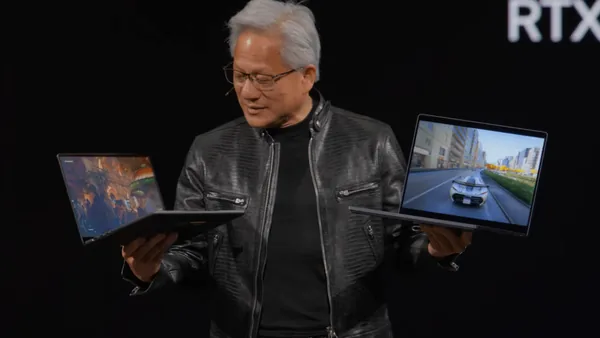
Nvidia CEO Jensen Huang holds up two RTX Spark laptops at Computex 2026
General / theverge.com

This could be Windows’ M1 moment — but expect it to cost a ton

Nvidia's RTX Spark laptop chip packs 20 CPU cores, 6144 CUDA cores, and 128GB unified LPDDR5X memory, promising RTX 5070-level graphics in a unified Arm architecture. Derived from the DGX Spark's GB10 silicon, it targets AI agent workloads and creative apps (Adobe optimized), with Microsoft's Surface Laptop Ultra as a flagship partner. However, the 128GB RAM and premium design push prices well above $3,000, mirroring AMD's Strix Halo models and risking adoption despite the Apple M1-like potential.

Nobody installs your MCP server. The ones who do don't use it.
General / dev.to

Nobody installs your MCP server. The ones who do don't use it.

MCP server adoption suffers two distinct failures: the technical install across incompatible clients (Claude Desktop, Cursor, Windsurf, VS Code — each requiring different config formats and field names) and the 'second install' — getting users to actually make a tool call. The author's funnel shows that of users who reach the connect screen, fewer than half ever produce a single tool call, because once connected, users stare at a blank prompt and leave. The structural N×M problem (multiple clients × multiple servers) makes configuration brittle, with silent failures when field names like `url` vs `serverUrl` differ.