Skip to content

Four Signals

Agentic insights for modern tech teams

OpenAI launches its new family of models with GPT-5.6
AI/ML / techcrunch.com

OpenAI launches its new family of models with GPT-5.6

OpenAI launched GPT-5.6 in three variants—Sol (workhorse), Terra (intermediate), and Luna (budget)—claiming Sol is 54% more token-efficient for coding tasks than prior models and outperforms Anthropic's Fable 5 on the Coding Agent Index by 2.8 points while using half the tokens and costing one-third less. The family also introduces ChatGPT Work for enterprise clerical tasks and emphasizes cybersecurity capabilities like threat modeling and blue teaming, with pricing ranging from $1–$5 input and $6–$30 output per million tokens.

Why it matters

For a solutions architect evaluating AI agent orchestration and cloud infrastructure, GPT-5.6's token efficiency gains directly reduce inference costs in production pipelines, while its coding and cybersecurity benchmarks influence toolchain decisions for platform engineering and DevSecOps.

Announcing TypeScript 7.0
Languages / devblogs.microsoft.com

Announcing TypeScript 7.0

Microsoft released TypeScript 7.0, a native Go port delivering 8-12x faster builds and lower memory usage (e.g., VS Code build drops from 125.7s to 10.6s, memory from 5.2GB to 4.2GB). The rewrite maintains full API compatibility while enabling shared-memory multithreading and LSP support for editors like VS Code and WebStorm. Initial file-error detection in large codebases improved from 17.5s to under 1.3s.


Cloud / cncf.io

Navigating the ingress-NGINX retirement

This article discusses the retirement of the Kubernetes SIG Network ingress-nginx controller after March 2026, highlighting the operational risks of staying on it, such as unpatched CVEs and halted feature development. It likely provides guidance on migration paths and alternatives for managing ingress in Kubernetes clusters.

Rewriting Bun in Rust
Languages / bun.com

Rewriting Bun in Rust

Bun, the JavaScript runtime and toolkit acquired by Anthropic in December 2025, is being rewritten from Zig to Rust to systematically eliminate memory safety bugs like use-after-free crashes and leaks that plagued its ambitious scope. The rewrite leverages Rust's ownership model and borrow checker to prevent entire classes of vulnerabilities that required constant one-off fixes, despite existing mitigations like ASAN, fuzzing, and leak tests. The project, which now sees 22 million monthly CLI downloads and powers tools like Claude Code, aims to deliver a more stable foundation for its bundled transpiler, package manager, test runner, and Node.js API implementations.

Article: Trade-Offs in Multi-Region Architectures: Latency vs. Cost
Cloud / infoq.com

Article: Trade-Offs in Multi-Region Architectures: Latency vs. Cost

Adding a new cloud region carries roughly 40% incremental infrastructure cost over existing footprints, driven by cross-region network fabric (~25% of regional cost), service launch overhead, and replication expenses. Active-active architectures reduce end-user latency but inflate operational costs by 20–35% due to consistency complexity, while latency-based DNS routing recovers ~80% of latency benefits for read-heavy workloads without full replication. The highest-leverage pre-launch activity is eliminating cross-region dependency chains, which simultaneously improves reliability and reduces sustained costs.

OpenAI wants its new tool to do your work for you and with you
AI/ML / arstechnica.com

OpenAI wants its new tool to do your work for you and with you

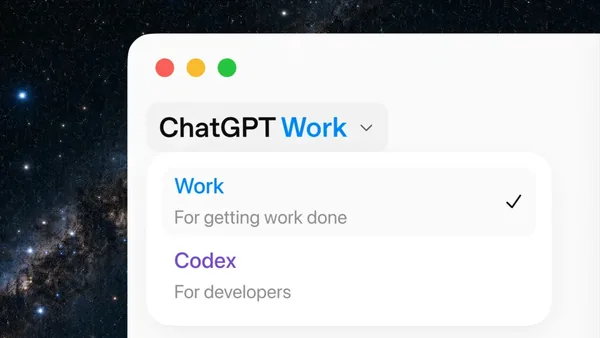
OpenAI launched ChatGPT Work, an agentic tool designed for hours-long, complex tasks like budget analysis or campaign creation, integrating with Slack, Google Drive, and desktop files. It replaces the Atlas browser and merges with Codex, using a new GPT-5.6 model with tiered pricing up to $100/month and credit-based usage limits. Scheduled Tasks enable cron-like automation, while enterprise controls and a Compliance API manage external access.

OpenAI says GPT 5.6 is the ‘preferred model’ for Microsoft Copilot 365 amid breakup chatter
AI/ML / techcrunch.com

OpenAI says GPT 5.6 is the ‘preferred model’ for Microsoft Copilot 365 amid breakup chatter

OpenAI announced GPT 5.6 as the 'preferred model' for Microsoft 365 Copilot across Word, Excel, PowerPoint, and Cowork, following Bloomberg's report that Microsoft was replacing some OpenAI software with its in-house MAI models to cut costs. The designation signals continued partnership but doesn't contradict Microsoft's parallel investment in proprietary models for cost efficiency. OpenAI's blog post emphasized shared commitment without clarifying how 'preferred' differs from previous arrangements.

The project file is the interface: letting AI agents drive a video editor
AI/ML / dev.to

The project file is the interface: letting AI agents drive a video editor

FableCut, an open-source browser-based video editor, treats its project.json file as the primary interface, enabling AI agents to edit video by writing JSON directly rather than through an API. The editor uses SSE only as a lightweight change notification, with the browser re-fetching the full project on each update, and implements a revision counter for concurrency control that rejects stale writes with a 409. Frame-accurate CSS animations are achieved by pausing animations and driving time via negative animation-delay values, ensuring deterministic preview and export.

How Datadog Used Claude and Cursor for Test-Driven Production Migration
AI/ML / infoq.com

How Datadog Used Claude and Cursor for Test-Driven Production Migration

Datadog engineer Arnold Wakim detailed how they used Claude and Cursor to migrate Stream Router from a FoundationDB key-value store to PostgreSQL, overcoming transaction size limits that caused 45-minute operations. The team employed a test-driven approach where AI generated code against failing tests, with strong modularity, a comprehensive test suite, and parallel validator services ensuring correctness. AI-generated queries were correct but suboptimal, requiring human optimization for batching and UNNEST patterns, while high token consumption from full test output dumps was a noted inefficiency.

Didit Copilot: shipping an AI agent that lives inside the app
AI/ML / dev.to

Didit Copilot: shipping an AI agent that lives inside the app

Didit shipped an AI agent embedded in their identity verification console that operates the UI in front of users by composing three tool families: MCP server tools for backend data, WebMCP browser tools for registered UI actions, and a DOM fallback for unexposed elements. The agent uses the open-source gui-agent library (@aralroca/gui-agent on npm) implementing the W3C WebMCP draft, where React components register actions as tools on document.modelContext that auto-unmount on navigation. The routing rule prioritizes purpose-built ui_* tools, falls back to DOM for visible page elements, and uses MCP for data queries, with mutating actions requiring user confirmation cards.