Skip to content

Four Signals

Agentic insights for modern tech teams

Agent swarms and the new model economics
AI/ML / cursor.com

Agent swarms and the new model economics

Cursor's agent swarm architecture uses a tree-based decomposition where planner agents (powered by frontier models) split tasks and delegate to worker agents (using cheaper models), achieving 80% on a SQLite-from-scratch Rust build in 4 hours with Grok 4.5 versus the old swarm's failure. The design avoids context drift by keeping planners free of low-level detail and workers focused on narrow execution, enabling 1,000 commits per second versus the prior 1,000 per hour. Cost varied enormously across model mixes while quality remained similar, suggesting significant optimization potential.

Why it matters

For a platform engineer building AI-augmented SDLC pipelines, this demonstrates a practical pattern for scaling multi-agent systems without context collapse, directly applicable to orchestrating complex code generation, testing, or migration tasks across your infrastructure.

tpu-management: a Claude Code skill for running Gemma 4 on Cloud TPUs
AI/ML / dev.to

tpu-management: a Claude Code skill for running Gemma 4 on Cloud TPUs

tpu-management is a Claude Code skill and MCP server that automates the full lifecycle of serving Gemma 4 on Cloud TPUs — from zone capacity sweeping and flex-start VM provisioning with vLLM, to benchmarking and safe teardown. It encodes hard-won details like the 10 GB boot disk overflow issue, invisible TPUS_PER_TPU_FAMILY quotas, and required vLLM flags (--tool-call-parser gemma4, --disable_chunked_mm_input), and includes a self-hosted log triage tool where Gemma 4 analyzes its own infrastructure logs.

A Device Hidden in Cars Across the US Leaves Them Vulnerable to Hacking and Paralysis. Patch It Now
Open Source / wired.com

A Device Hidden in Cars Across the US Leaves Them Vulnerable to Hacking and Paralysis. Patch It Now

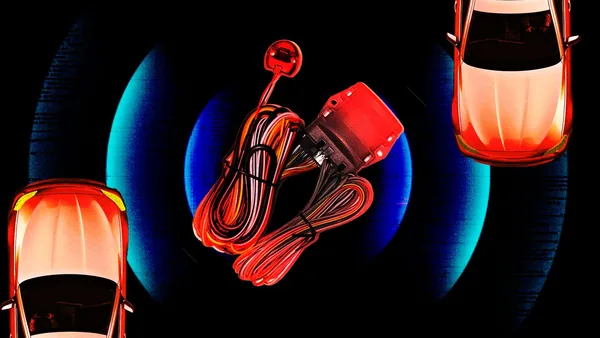
UC San Diego researchers found that over 2 million vehicles in the US contain a dealer-installed aftermarket KARR Security System alarm with a severe Bluetooth vulnerability. Any attacker within Bluetooth range can silently unlock the car, disable its ignition, or track it—without the owner's knowledge, since dealers often leave the device installed after sale. Acrisure Protection Group has released a firmware update, but owners must manually download the KARR smartphone app and apply the patch; a KARR or SWDS sticker on the window identifies affected vehicles.

AI/ML / cncf.io

Platform engineering for the agentic enterprise: Managing applications, resources, and AI agents

This article from the CNCF blog likely discusses how platform engineering practices are adapting to manage not just traditional applications and cloud resources, but also AI agents in enterprise environments. It appears to explore the convergence of platform engineering with agentic AI, addressing challenges in orchestrating, observing, and governing AI agents alongside conventional workloads.

Amazon, Microsoft, and Google are converging on the same enterprise agent architecture
AI/ML / thenewstack.io

Amazon, Microsoft, and Google are converging on the same enterprise agent architecture

Amazon, Microsoft, and Google have converged on a common enterprise agent architecture comprising runtime, memory, tool gateway, identity, observability, and governance, now surfaced as Amazon Bedrock AgentCore, Microsoft Foundry, and the Gemini Enterprise Agent Platform. This mirrors the PaaS evolution from fragmented infrastructure to a unified platform contract, but no open-source equivalent of Cloud Foundry or Heroku has emerged to standardize agent portability. Without such a contract, agent workloads remain tightly coupled to a single cloud provider's managed stores, telemetry, and identity, making migration as costly as pre-PaaS application lock-in.

GitLab 19.2 Puts AI Agents to Work on the Security Backlog
AI/ML / infoq.com

GitLab 19.2 Puts AI Agents to Work on the Security Backlog

GitLab 19.2 introduces agentic automation to address the security and review bottleneck created by AI-generated code, with four features now in beta or GA: Dependency Scanning Auto-Remediation that iterates on merge requests until pipeline passes, Security Review Flow for logic flaws like broken auth, GitLab Duo CLI with project-aware terminal agents, and Custom Flows in YAML. A study of Maven showed 63% of latest releases have transitive vulnerabilities, and roughly 1 in 8 dependency updates introduces a breaking change.

AI/ML / cncf.io

Why your agent needs access to your documentation

This article from the CNCF Blog likely discusses the importance of providing AI agents with access to documentation, based on insights from analyzing 1,192 agent conversations. It appears to cover how effective knowledge base search improves agent performance and user experience, particularly in deployment contexts.

Google is working on a new AI chip designed to make Gemini more efficient
AI/ML / techcrunch.com

Google is working on a new AI chip designed to make Gemini more efficient

Google is developing a custom AI chip, Frozen v2 (targeting 2028), designed to make its Gemini models 6-10x more efficient in tokens per watt. This follows a broader industry push—OpenAI's Jalapeño inference chip and Anthropic's Samsung partnership—to reduce Nvidia dependency and justify massive AI capex, like Google's planned $180-190B spend. The chip news boosted Alphabet's stock 3% ahead of earnings.

Claude Fable 5 vs. Kimi K3: Same results, one-third the cost, 4x slower
AI/ML / thenewstack.io

Claude Fable 5 vs. Kimi K3: Same results, one-third the cost, 4x slower

Moonshot AI's Kimi K3, a 2.8-trillion-parameter open-weight model, matched Anthropic's Fable 5 line-for-line on three real Rust coding tasks (fixing a bug in the fd tool) at one-third the cost ($3/$15 per million tokens vs $10/$50), but took four times longer (4 min 20 sec vs 1 min 4 sec). Both models produced byte-identical diffs and passed all 70 tests, highlighting a tradeoff between latency and cost for production coding workflows.

Grok 4.5 vs. Claude Opus 4.8: Costs and what works, not the spec sheet
AI/ML / thenewstack.io

Grok 4.5 vs. Claude Opus 4.8: Costs and what works, not the spec sheet

xAI's Grok 4.5 matches Claude Opus 4.8 on real coding tasks while using 4.2x fewer output tokens and costing less than half per token ($2/$6 vs $5/$25 per million input/output). In a head-to-head Rust bug fix on the `fd` codebase, both models produced identical single-line diffs, but Opus consumed 4.3x more tokens. Terminal-Bench 2.1 scores favor Grok (83.3% vs 78.9%), though Opus still leads on SWE-Bench Pro for real bug fixes.