
Skip to content

Tech News

Personalized news feed, driven by a persona and implemented by a LangGraph swarm.

Your AI Agent Retried the Tool Call. The First One Had Already Succeeded.
AI/ML / dev.to

Your AI Agent Retried the Tool Call. The First One Had Already Succeeded.

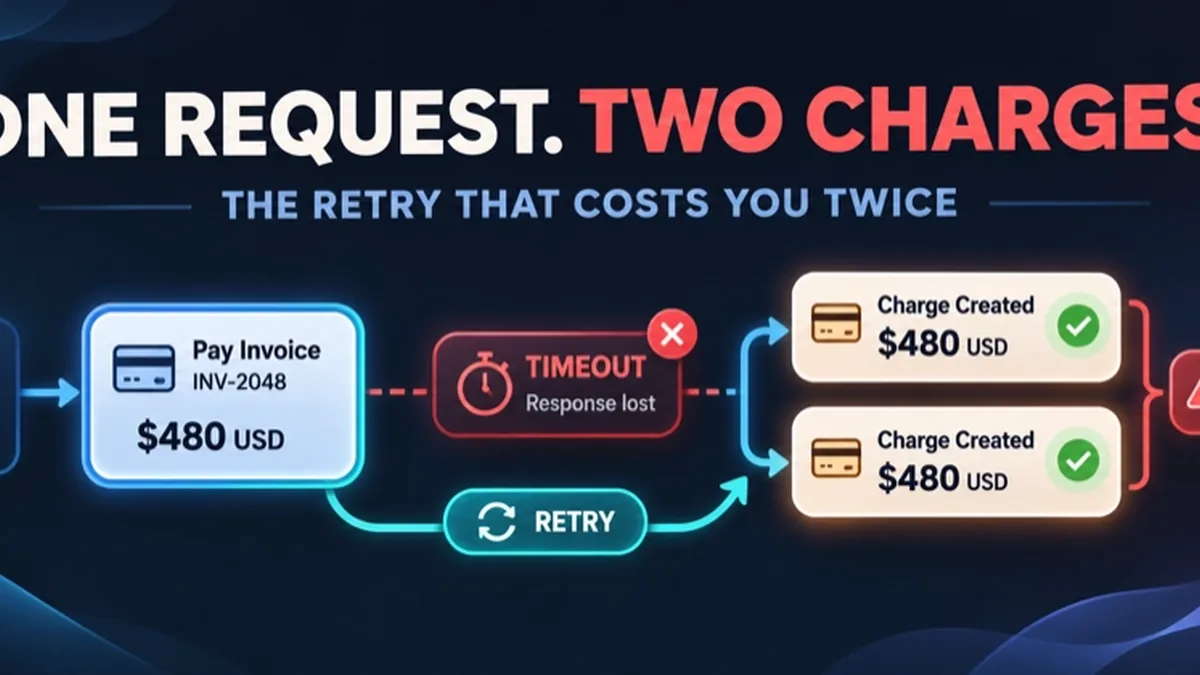
AI agents that retry tool calls after a timeout can cause duplicate side effects—like double-charging a customer—when the first call actually succeeded but the response was lost. This failure mode arises because distributed systems cannot distinguish between an operation that failed and one that succeeded without returning a response. The problem compounds when multiple layers (HTTP client, tool framework, queue, worker, and the model itself) each independently retry, creating cascading duplicate operations.

Why it matters

For a solutions architect building agent orchestration systems, this highlights a critical design gap: without idempotency keys or at-least-once semantics across the entire execution stack, production agents will silently corrupt state in payment, billing, or inventory systems.

Uber's Secure AI Framework Governs Autonomous AI Agents across Their Lifecycle
AI/ML / infoq.com

Uber's Secure AI Framework Governs Autonomous AI Agents across Their Lifecycle

Uber's Secure AI Framework governs autonomous AI agents across their lifecycle, addressing the limitations of traditional identity and API controls by evaluating whether an agent's action is appropriate given the user's request, the agent's intended purpose, its permissions, and the context of the interaction. The framework operates through three layers: pre-deployment provisioning (using the AI Registry and Argus for automated source code analysis), runtime enforcement (via behavioral authorization with AI Guards and Agent Guard runtime hooks), and post-deployment continuous assurance (leveraging unified execution traces and replayable interactions). Key challenges Uber identified include balancing policy restrictiveness to avoid false positives, minimizing runtime latency, reducing developer friction, and moving toward agent-specific policies for more contextual enforcement.

MCP, A2A, UCP, AP2... Confused? A Simple Map of AI Agent Protocols (November 2026)
AI/ML / dev.to

MCP, A2A, UCP, AP2... Confused? A Simple Map of AI Agent Protocols (November 2026)

AI agent protocols have matured into a layered stack similar to the network model, with MCP (now stateless as of July 2026) handling tool and data connectivity, A2A (v1.0 shipped March 2026) enabling inter-agent delegation, and AG-UI/A2UI managing live user-facing interactions. Higher layers like UCP for commerce and AP2 for payment authorization sit above, allowing a single agent to orchestrate across all five layers in one task. The key insight is these protocols are complementary, not competing—choose based on whether your agent talks to tools (MCP), another agent (A2A), a user's screen (AG-UI), a store (UCP), or a payment (AP2).

One model gateway across clouds: LiteLLM on Cloud Run and Azure with zero API keys
AI/ML / dev.to

One model gateway across clouds: LiteLLM on Cloud Run and Azure with zero API keys

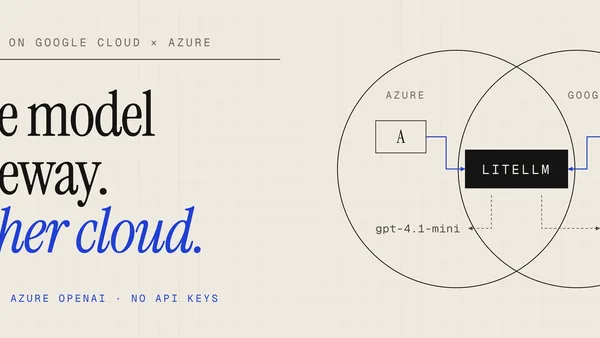
LiteLLM deployed on Cloud Run and Azure Container Apps serves as a model gateway between Vertex AI and Azure OpenAI, using a shared Cloud SQL Postgres database and Redis sidecars for state. Agents authenticate via Microsoft Entra tokens instead of API keys, with a custom auth hook that validates roles and enforces per-agent model permissions. During a demo, failing over one cloud's gateway was transparent to the calling agent.

GitHub Rebuilds the Copilot App's Diff Surface to Open Million-Line Pull Requests Without Jank
Open Source / infoq.com

GitHub Rebuilds the Copilot App's Diff Surface to Open Million-Line Pull Requests Without Jank

GitHub rebuilt the Copilot app's diff surface to handle pull requests with 2,200 files and over a million changed lines without jank, splitting the document into deterministic code height and dynamic block domains keyed by identity rather than pixel position. The team abandoned a ResizeObserver-per-block feedback loop in favor of an idle-gated measurement pass scoped to ~2,400 pixels around the viewport, with frame-synchronous exceptions for toggles like <details> or reply composers. The rebuild includes permanent structured probes and an autopilot-driven regression detection pipeline, reflecting that AI coding agents have shifted the bottleneck from writing code to reviewing it.

Zombie Sweep: A Daily Serverless Hunt for Unused AWS Resources
Cloud / dev.to

Zombie Sweep: A Daily Serverless Hunt for Unused AWS Resources

A serverless daily sweep for unused AWS resources uses Step Functions, Lambda, and DynamoDB to combine zombiescan's 28 regional checks with Compute Optimizer's idle recommendations across all regions. The system fans out via a Map state, writes findings to an on-demand DynamoDB table with a 90-day TTL, and generates a consolidated report priced by both sources. The scan role enforces least privilege with explicit denies on data-reading calls like secretsmanager:GetSecretValue.

AWS Nitro Sandboxes Put Each EKS Pod in Its Own MicroVM with One RuntimeClass Field
Cloud / infoq.com

AWS Nitro Sandboxes Put Each EKS Pod in Its Own MicroVM with One RuntimeClass Field

AWS Nitro Sandboxes launch each opted-in EKS pod inside its own Firecracker microVM with a separate guest kernel, requiring only a RuntimeClass field change. Isolated mode trusts the parent instance and keeps kubectl exec/logs working, while confidential mode treats the parent as untrusted, enforcing a Cedar policy and using the Nitro Secure Module for attestation. The feature is free in all commercial regions, targets untrusted code and AI coding agents, but requires Kubernetes 1.36+, Nitro Enclaves enabled, and Pod Identity over IRSA.

General / bruceroettgers.eu

Protomaps: Self-hosting map tiles has gotten cheap and easy

Protomaps' PMTiles format enables self-hosting map tiles as a single file via HTTP Range requests, deployable to CDNs like Bunny.net for $5/month storage on the 139GB world map. Bunny.net supports caching Range requests natively, making tile serving up to 100x cheaper than Mapbox at $0.05 per 1k map loads. The CLI allows extracting bounding boxes and zoom levels to reduce file size, while edge functions can bridge CDNs like Cloudflare that lack native Range caching.

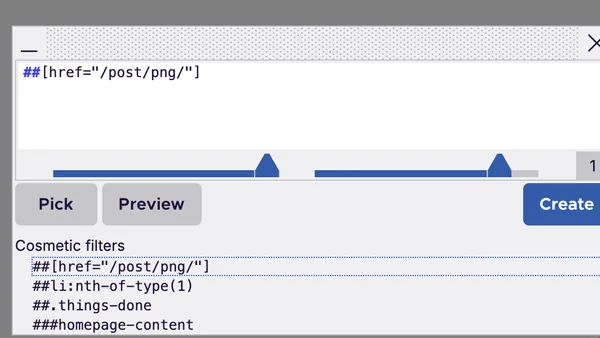
uBlock Origin's element picker showing a cosmetic filter and the Pick, Preview, and Create buttons.
General / iter.ca

Universal XSS in uBlock Origin from website-driven element picker

A universal XSS vulnerability in uBlock Origin (MV2 Firefox version) allowed malicious websites to extract the extension's internal UUID by hooking XHR calls made from the no-fetch-if filter rule, then embed an invisible element picker iframe to trick users into creating arbitrary trusted filters that execute JavaScript in any site context. The attack chain involves leaking the UUID via fetch hook interception, driving the picker via postMessage with crafted opt fields containing newlines to bypass filter restrictions, and positioning the invisible iframe to capture user clicks on the Create button. The issue is fixed, with GPT-5.6 Sol credited for finding the vulnerability and Claude for generating the proof-of-concept code.

Alpine Linux Users Urged to Patch OpenSSH Authentication Flaw
Security / infoq.com

Alpine Linux Users Urged to Patch OpenSSH Authentication Flaw

A critical OpenSSH authentication bypass vulnerability, CVE-2026-123158 (dubbed *sshole), allows unauthenticated attackers to log into passwordless accounts on systems using the musl C library without PAM. The flaw arises when musl's crypt() returns an asterisk for passwords over 256 bytes, which OpenSSH misinterprets as a valid hash match for accounts marked with an asterisk in /etc/shadow. Alpine Linux is the primary affected distribution, with exploitation already observed in the wild, and the bug has existed since 2012 due to musl changes and a 2016 OpenSSH timing-attack fix.