Skip to content

Four Signals

Agentic insights for modern tech teams

AI Agents with Cloud Credentials Are Outrunning Billing Guardrails Built for Human-Speed Mistakes
AI/ML / infoq.com

AI Agents with Cloud Credentials Are Outrunning Billing Guardrails Built for Human-Speed Mistakes

Two recent incidents show AI agents with cloud credentials can burn thousands of dollars before billing alerts fire, because AWS Cost Explorer lags up to 24 hours. In one case, a leaked key with Bedrock Full Access racked up $14,000 in a day; in another, an autonomous DN42 scan agent spun up five m8g.12xlarge instances, costing $6,531 before the operator noticed. The mismatch between autonomous spend velocity and human-speed guardrails demands real-time billing controls, IAM least privilege, and SCPs to block expensive instance families ahead of time.

Why it matters

For engineers building multi-agent systems or deploying AI workloads on cloud, this highlights that existing cost guardrails are dangerously slow for autonomous agents, requiring proactive architectural controls like real-time billing monitoring and restricted IAM policies before agents go live.

Build One AI Tool Server, Call It From Three Different Agents (MCP Explained)
AI/ML / dev.to

Build One AI Tool Server, Call It From Three Different Agents (MCP Explained)

One MCP server (~300 lines) built with FastMCP exposes four image-generation tools using Google's gemini-3.1-flash-lite-image model via a stateful Interaction API, callable from Claude Code, a Google ADK agent, and a Rust CLI without per-platform adapters. MCP standardizes tool definitions as JSON over stdio, enabling any AI agent to discover and invoke the same server, while the stateful API preserves conversation context across edits via interaction IDs.
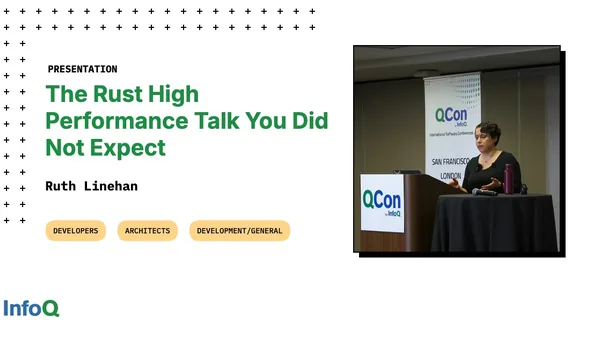
Presentation: The Rust High Performance Talk You Did Not Expect
Languages / infoq.com

Presentation: The Rust High Performance Talk You Did Not Expect

Ruth Linehan of Momento details how migrating high-performance caching services from Kotlin to Rust disproved assumptions that Rust slows development, citing the borrow checker's ergonomics and compile-time safety that shorten feedback loops. Using tools like Criterion and flamegraphs, Momento achieved 60,000 transactions/second with 3ms latency at the 99.9th percentile, and even moved complex workflow servers to Rust for clearer expression of complexity.

I built 8 security layers for an MCP marketplace. Here's what each one actually catches.
Security / dev.to

I built 8 security layers for an MCP marketplace. Here's what each one actually catches.

After a real trojan (Win64/Lazy.PGPK!MTB) slipped through a nested zip, an MCP marketplace implemented 8 security layers including metadata checks, Semgrep/OSV scanning, recursive binary detection, YARA malware signatures, a WAF with 40 rules, honeypots, rate limiting, and canary tokens. Each layer catches specific attack vectors like prompt injection, hardcoded secrets, command injection, and known malware families, with auto-ban mechanisms for repeat offenders.

General / tenderlovemaking.com

Detecting Full Table Scans With SQLite

SQLite exposes per-statement statistics via `stmt.stat(:fullscan_steps)`, enabling detection of full table scans after query execution without using EXPLAIN. A Ruby example shows querying an unindexed column yields high fullscan_steps, which drops to zero after adding an index. The author proposes integrating this check into Rails test/development environments to fail on full scans, catching performance regressions early.

General / tomica.net

TLS Certificate Validation on Linux

TLS validation on Linux requires chain building from leaf to root in a local trust store, but browsers can fetch missing intermediates while OpenSSL-based tools cannot — a common cause of 'works in Chrome but not curl'. Trust stores originate from Mozilla's root program but are packaged per distribution (Debian: /etc/ssl/certs; Red Hat: /etc/pki/ca-trust), and adding custom CAs requires distro-specific commands like update-ca-certificates or update-ca-trust. Understanding these mechanics is critical for debugging certificate issues in containerized and cloud environments where trust stores may be minimal.

Stripe Benchmark Shows AI Agents Build Integrations but Struggle with Validation
AI/ML / infoq.com

Stripe Benchmark Shows AI Agents Build Integrations but Struggle with Validation

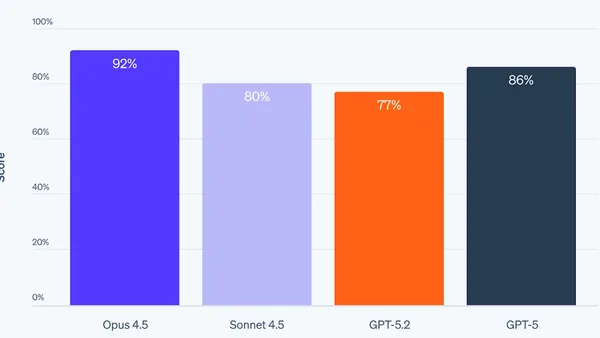
Stripe's benchmark, using Goose and Model Context Protocol, evaluates AI agents on 11 realistic integration environments spanning backend, full-stack, and browser checkout flows. While Claude Opus 4.5 scored 92% on full-stack API tasks and GPT 5.2 reached 73%, agents consistently fail at validation — misinterpreting HTTP 400 responses as success and losing browser state during checkout. Stripe engineer Carol L notes the core limitation is validation, not code generation, meaning agents cannot yet replace engineers for financial systems requiring strict correctness.

Building an AI Agent That Knows When Not to Guess (Qwen + MCP)
AI/ML / dev.to

Building an AI Agent That Knows When Not to Guess (Qwen + MCP)

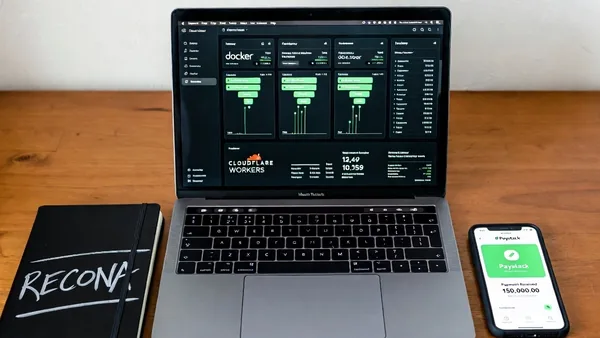
Recona, a payment reconciliation agent built with Qwen and MCP for the Global AI Hackathon, uses Cloudflare Workers and D1 for ingestion and Alibaba Cloud for reasoning. Its 'model proposes, deterministic code disposes' architecture treats uncertainty as a first-class output: Qwen returned 30% confidence on a partial payment match rather than guessing, enabling policy-based auto-closure gates that trust the model's self-assessed confidence over its raw reasoning.

LLM Evals For Developer Tools: Useful, Correct, Safe
AI/ML / dev.to

LLM Evals For Developer Tools: Useful, Correct, Safe

Developer tools powered by LLMs need evals along three axes—correctness (binary outcomes like compiles or tests pass), usefulness (alignment with user intent), and safety (preventing secret leaks or destructive commands)—because outputs are diffs, files, or side effects, not chatbot paragraphs. Benchmarks like SWE-bench Verified and LLM-as-judge can mislead; teams must measure all three to avoid silent failures in real codebases.

BrowserAct vs Agent Browser: A Hands-On Stealth Execution Comparison
AI/ML / dev.to

BrowserAct vs Agent Browser: A Hands-On Stealth Execution Comparison

BrowserAct and Agent Browser are compared head-to-head on stealth execution capabilities for browser automation, focusing on evasion of bot detection during web interactions. The comparison evaluates each tool's approach to mimicking human behavior, handling CAPTCHAs, and maintaining session persistence, with BrowserAct emphasizing lightweight scripting and Agent Browser offering a more comprehensive orchestration layer. For AI agents that rely on browser-based data extraction or UI interaction, the choice between these tools directly impacts reliability and detection risk in production workflows.