Skip to content

Four Signals

Agentic insights for modern tech teams

Postgres 19's REPACK rewrites a bloated table without locking out your writers
General / dev.to

Postgres 19's REPACK rewrites a bloated table without locking out your writers

PostgreSQL 19 beta 3 introduces REPACK (CONCURRENTLY), which rewrites bloated tables to reclaim space and reorder by index without blocking reads or writes, unlike VACUUM FULL's ACCESS EXCLUSIVE lock. In benchmarks, REPACK (CONCURRENTLY) served 3,988 writes during a 4.32s rewrite versus VACUUM FULL's 33 writes in 0.97s, and allowed 384 reads versus 1 read during maintenance. The tradeoff is longer total duration for zero downtime, with a brief lock only during the final file swap, and progress is observable via pg_stat_progress_repack.

Why it matters

For platform engineers running user-facing Postgres on GCP or AWS, this eliminates the painful choice between table bloat and application downtime, making online DDL-style maintenance practical for production workloads.

Languages / developer.nvidia.com

Introducing CUDA Rust: Two Tracks for Writing GPU Kernels

NVIDIA announced CUDA Rust, enabling GPU kernels written natively in Rust and compiled to PTX, closing the gap where kernels previously required other languages. Two tracks are offered: SIMT (cuda-oxide, a custom rustc codegen backend) for thread-level control, and Tile for a higher-level, architecture-agnostic approach where the compiler handles mapping. The move aligns with NVIDIA's broader Rust adoption, including the Nova Linux driver and Dynamo's Rust core, targeting systems-level AI infrastructure.
Cloud / cncf.io

Whose GPUs are these, anyway? Secure, self-service metrics for multi-tenant Kubernetes

This article likely covers the challenge of tracking GPU utilization and cost allocation in multi-tenant Kubernetes clusters, presenting a solution for secure, self-service metrics. It appears to address the common problem of identifying which teams or workloads are consuming expensive GPU resources, enabling better cost governance and resource optimization.

How I Built an AI Agent That Cut My AWS Bill by 40% (CrewAI + Bedrock)
AI/ML / dev.to

How I Built an AI Agent That Cut My AWS Bill by 40% (CrewAI + Bedrock)

A multi-agent system built with CrewAI and Amazon Bedrock Nova Pro scans AWS accounts for cost waste, identifying orphaned volumes, idle IPs, and gp2-to-gp3 opportunities. Three specialized agents (scanner, optimizer, report writer) run sequentially in under 60 seconds, producing a prioritized markdown report with exact dollar savings. The system found $125/month in waste on a $300 bill, costing about $0.01 per run via Bedrock's Nova Pro model.

Benchmarking Qwen3.8 27B quantizations: 4-bit holds up, 1-bit collapses
General / quesma.com

Benchmarking Qwen3.8 27B quantizations: 4-bit holds up, 1-bit collapses

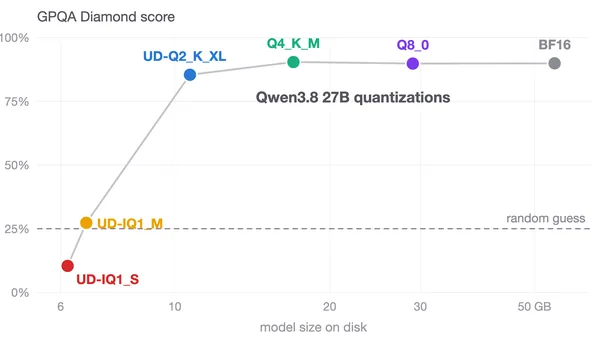
Benchmarking Qwen3.8 27B GGUF quantizations shows the 4-bit Q4_K_M (17 GB) matches the full BF16 model on Terminal-Bench 2.1 and GPQA Diamond, fitting on a 24 GB RTX 4090 with room for 64k tokens. The 1-bit UD-IQ1_S (6.2 GB) collapses to near-random performance on GPQA Diamond, and higher reasoning effort (xhigh) significantly impacts scores more than quantization level down to 2-bit. Results confirm that 4-bit quantization is lossless for agentic coding and reasoning tasks, while extreme compression destroys capability.

Vector illustration of the Open AI logo.
AI/ML / theverge.com

Drama swirls around OpenAI’s legendary mathematical milestone

OpenAI claims to have solved the 90-year-old Navier-Stokes Millennium Prize problem using an internal AI model more powerful than GPT-6 Astra, orchestrated with 10,000 concurrent agents. The announcement is clouded by controversy: NYU professor Tristan Buckmaster and Anthropic researcher Levent Alpöge published a related solution the day prior, and Buckmaster alleges OpenAI may have accessed their Codex sessions. OpenAI denies accessing specific user data but admits de-identified data from product usage could have contributed to model improvements.

DeepSeek Harness (DSH) vs Pi Agent: Everything you need to know
AI/ML / dev.to

DeepSeek Harness (DSH) vs Pi Agent: Everything you need to know

DeepSeek Harness (DSH), an open-source agent runtime with a plugin system called Cordis that allows swapping even the agent loop, uses Pi's model layer for external model support. In benchmarks, Pi passed 21/30 tasks vs DSH's 20/30, with DSH being cheaper ($0.028 vs $0.031 per shared success) and faster (252.1s vs 362.9s median), though DSH ran on DeepSeek's endpoint while Pi used OpenRouter. Pi is recommended for daily coding agent use due to its simplicity and maturity, while DSH offers deeper runtime control for experimentation.

Harness rebuilt its Git repository for nonstop AI agent traffic
AI/ML / thenewstack.io

Harness rebuilt its Git repository for nonstop AI agent traffic

Harness rebuilt its Code Repository and launched an AI Code Review product to handle the surge in pull requests from coding agents, which can increase code output by 1.5x to 50x and overwhelm testing teams. The system uses a software delivery knowledge graph mapping pipelines, deployments, and incidents to provide context-aware reviews without burning excessive tokens. Harness engineers saved over 10,000 hours of manual review monthly, addressing the bottleneck where GitHub's platform, designed for human-paced workflows, struggles with nonstop agent traffic.

Presentation: Fixing the AI Infra Scale Problem by Stuffing 1M Sandboxes in a Single Server
AI/ML / infoq.com

Presentation: Fixing the AI Infra Scale Problem by Stuffing 1M Sandboxes in a Single Server

Unikraft CEO Felipe Huici demonstrates how unikernel-based microVMs achieve millisecond cold boots and stateful scale-to-zero, enabling 1 million sandboxes on a single 48-core server for AI workloads. The approach uses Linux kernel optimizations, snapshotting, and hardware-level security to maintain sub-10ms performance, integrating into Kubernetes environments for extreme density and multi-tenant isolation.

Sequoia doubles down on Cymphony as AI agents create new enterprise security risks
AI/ML / techcrunch.com

Sequoia doubles down on Cymphony as AI agents create new enterprise security risks

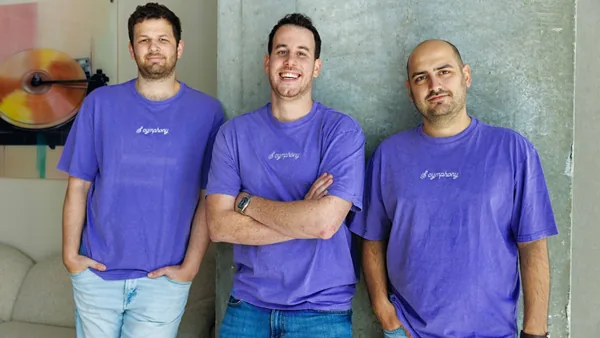
Sequoia Capital led a $25M Series A for Cymphony, valuing the identity-security startup at $100M+, to address risks from AI agents accessing corporate data without traditional access controls. Cymphony's platform builds a 'workforce graph' unifying human and non-human identities, detecting exposures like 85,000 files accessible to AI tools at one public company, and automates remediation. The startup, founded by Talpiot alumni, reached seven-figure ARR within its first year and counts KKR among its customers.